Coverage for a fight scene
The two philosophies of action coverage, the axis of action, the unit of coverage, and how to block a fight in 3D before the stunt team shows up to a half-day rehearsal you didn't budget for.
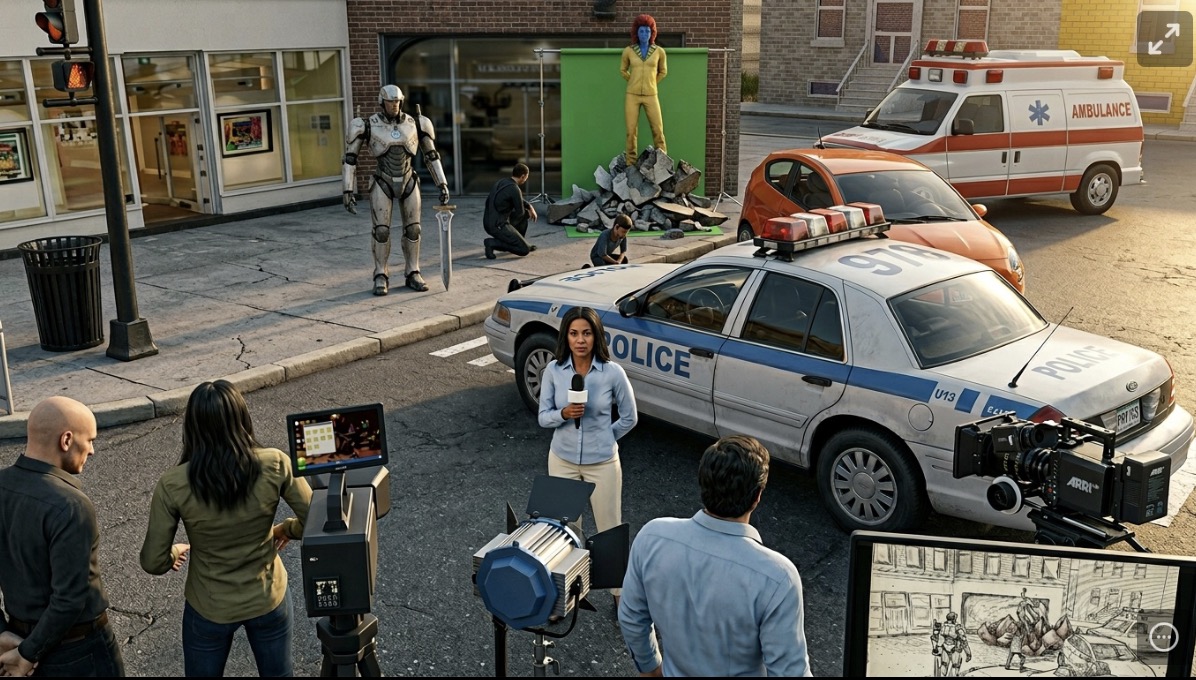
Action is the part of cinema where coverage decisions show up the fastest. A bad dialogue scene plays as flat. A bad fight plays as confusing — the audience can tell something happened but not what, or who won, or how. The reason is almost never the choreography. It is almost always the coverage.
This page is about the small set of decisions that separate readable action from decorative noise: which philosophy of coverage you've signed up for, where the axis of action lives, what counts as one unit of coverage, and what a lens does in a fight that it doesn't do in a dialogue scene. The geometric thinking from the dialogue 2-shot guide still applies — it just has to keep up.
Bad action isn't filmed badly. It's covered indecisively. Pick a philosophy, then commit.
Two philosophies of action coverage
Almost every fight on screen is closer to one of two poles. Mixing them at random is what produces the muddled action scene that everyone has watched and no one can describe afterward.
Show the geography
The audience always knows where everyone is. Wider lenses, longer-held masters, fewer cuts per beat. The fight reads as a chess problem you can follow: this fighter is here, that one is there, the door is on the left. The Raid (Evans, 2011), Mad Max: Fury Road (Miller, 2015), and the John Wick films (Stahelski, 2014–) live closer to this pole. The intelligibility is the point.
Show the impact
The audience feels every hit; geography is sacrificed for sensation. Tight singles, fast cuts, longer lenses, bodies in close foreground. The Bourne Ultimatum (Greengrass, 2007) is the canonical example. The viewer doesn't know exactly where the punch came from, but their stomach tells them it landed. The visceral reaction is the point.
Both philosophies work. Both have a craft tradition behind them. The failure mode is uncommitted coverage — a scene that has neither the geographic clarity of the first nor the visceral push of the second, and ends up being neither legible nor felt.
Pick one before you previs. Every coverage decision below changes depending on which one you signed up for.
The axis of action
The 180-line in a dialogue scene is between two faces. In a fight, the line moves with the fight — it runs between the two combatants, and it pivots when they pivot. Cross it silently and the audience reads the cut as the fighters changing places. They will not be able to say what went wrong. They will only feel that they no longer know who is who.
Practical rules of the axis in action:
- Track the line as the bodies move. If a fighter spins their opponent ninety degrees, the axis spun ninety degrees. Coverage on the new line, not the old one.
- Cross deliberately, on a motivated camera move. A push-in, a whip-pan, a body passing the lens. The audience needs a transition to read the new geometry.
- The cheat shot exists. A perfectly axial shot — directly down the line, neutral on which fighter is which side — can be used as a bridge between two opposite-axis singles. Use sparingly; it disorients on purpose.
- If you've crossed without realizing, flip the shot in the edit. The fix is sometimes mirroring the take. If the action allows it (no readable text or asymmetric props), it's a free save in post.
The unit of coverage: the triplet
A useful frame for blocking action: the smallest readable beat is three shots, not one. Intent, action, reaction.
- Intent. Fighter A sees the opening. Wide enough to show the geography, or tight enough to show the eye. Either choice is defensible; mixing within a single triplet is not.
- Action. The hit. This is usually the longest lens of the three — the impact is sold by compression and proximity.
- Reaction. Fighter B receiving the hit, or a third party watching. This is what tells the audience "the punch landed and it mattered."
A fight is then a sequence of triplets, with occasional re-establishing wide shots when the geography has shifted enough that the audience needs to re-locate. A two-minute fight is roughly twelve to twenty triplets. Plan in those units, not in individual shots.
This is one shape, not the only shape. Single-take action — long Steadicam runs through a fight, like the corridor sequence in Old Boy (Park Chan-wook, 2003) — discards triplets entirely in favor of choreography. The triplet is a tool for cut coverage. Use it when you're cutting.
Lens choice for action
The lens does different work in a fight than in a dialogue scene.
- Wides for geography. 24–35mm. The room, the doorways, the exits, the prop the fighter is reaching for. Establishing the chess board.
- Mediums for blocking. 35–50mm. Two fighters in frame at conversational distance, both legible. The default lens of the master shot.
- Longs for impact. 85–135mm. The hit, the wince, the moment of recognition. Compression flattens the foreground onto the background — the punch and the face share a single plane, which is why it lands.
- Very longs for surveillance. 200mm+. The watcher, the sniper, the opponent across the room. Used sparingly, this is the lens that says "someone is watching, and you don't yet know who."
The general principle: wider lenses tell the audience what is happening; longer lenses tell them how it feels. Action that doesn't move between those modes is one-note. Action that moves between them at random is incoherent.
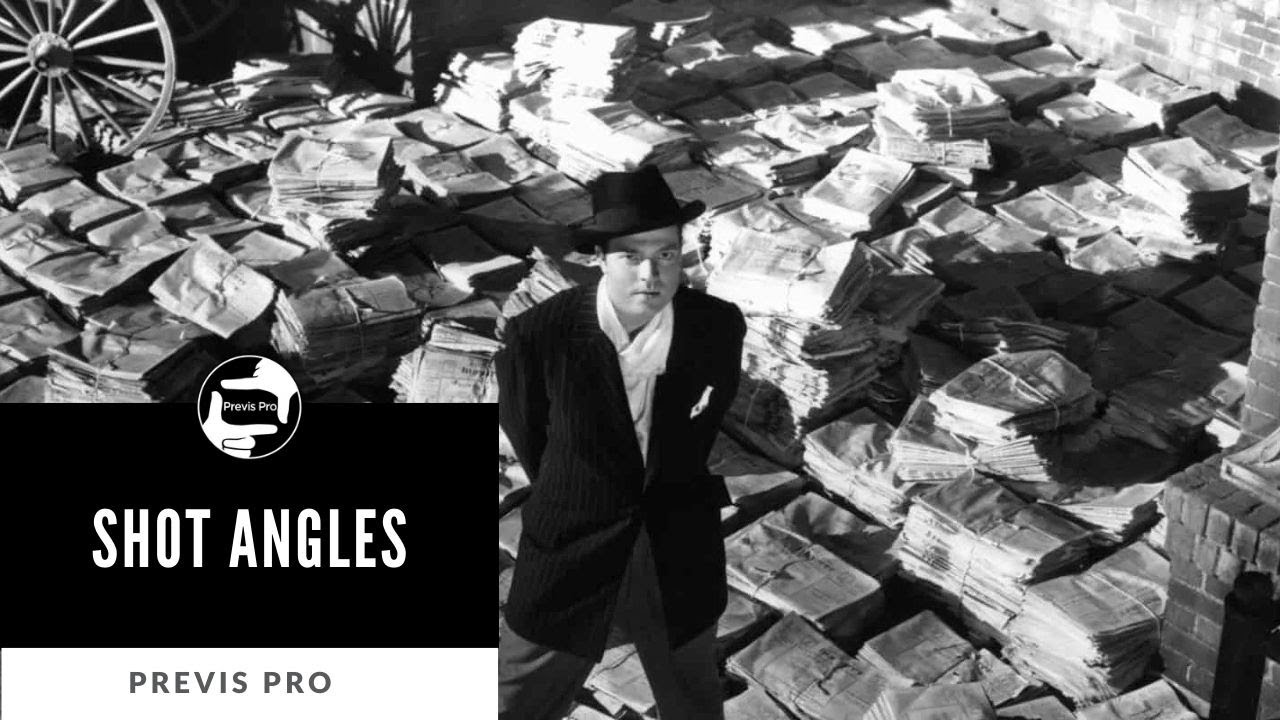
Watch on YouTube → · Shot Angles · 3:29 · Previs Pro Shot School
Cutting cadence
The cut is the hidden part of action coverage. Two principles that hold up across both philosophies above.
- Match cuts on motion. The cut lands on the apex or the strike, not in the still moment afterward. The audience reads the cut as part of the impact, not as a break in it.
- Fewer cuts, not more. The "Bourne school" of fast cutting works in Bourne because Greengrass committed; it does not work as a default. If your action is unreadable, the fix is almost always longer holds, not faster cuts.
Both of these are previs decisions. You can pre-time your cuts in the editorial timeline against blocked frames before any of the action is captured. That alone saves a day in the edit.
Where most fight scenes go wrong
- Mixed philosophies. Half geographic, half visceral. The audience reads neither.
- Crossed axis without a bridge shot. The fighters seem to swap places mid-cut. The viewer loses who-is-who and never gets it back.
- No reaction shot in the triplet. The hit lands on no one — the audience knows it happened but isn't told it mattered.
- Lens stuck in one register. All wides, or all longs. No modulation between geography and impact, so the scene reads as a single tone instead of an arc.
- Cuts that fall in the still moments. The cadence breaks. Compare a fight where every cut lands on a strike vs. one where cuts fall in pauses — the first reads sharp, the second reads choppy.
- The fight has no internal escalation. Beat one and beat eight feel the same. Action is an arc; if every beat lives at the same intensity the audience checks out around beat three.
Pre-block the fight in Previs Pro
Block the fight before the rehearsal
Drop two characters, set the axis, place camera A and camera B on the same side of it, and walk the triplets. Swap the lens for the impact shot. Watch the geometry hold across the cuts before any human has stepped on a mat. The free tier opens with full 3D blocking, AI generation, and an editorial timeline; exports carry our watermark until you upgrade.
If you're still picking a previs tool for this kind of work, our comparison of nine previs and storyboarding tools covers what each one does and where each one stops.
Fix it in pre. 🎬